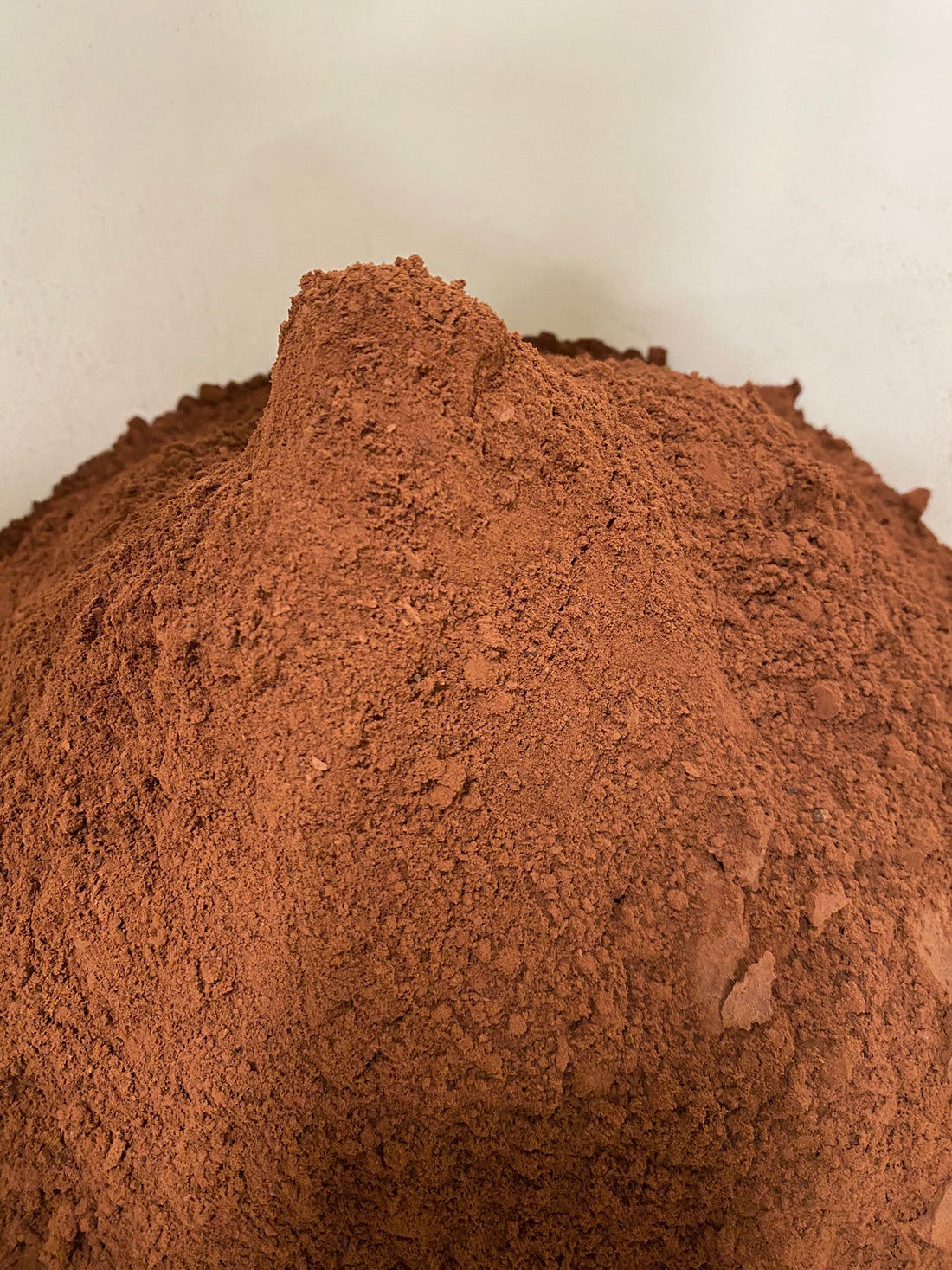
Pressing the cocoa liquor separates the fat (cocoa butter) from the dry matter (cocoa cake). This ground cake becomes partially defatted cocoa powder. This powder will then either be "alkalized" or called "natural".
It is natural because, unlike the cocoa powder primarily available, it does not undergo the alkalization process (developed by a certain "Van Houten" in 1828). This step involves treating the resulting powder with an alkaline solution to reduce acidity (pH), bitterness, and improve the solubility of the treated cocoa powder in water. The shade is then darker.
Reducing acidity allows it to be used in recipes and avoids possible acid reactions. Also, this milder taste may be preferred in ice creams, chocolate sauces, and certain pastries, for example.
However, this process has disadvantages, such as the loss of certain aromas specific to the origin of the bean, the farmer's work, and later the cocoa roaster's.
At the Manufacture, our hydraulic press allows us to obtain a natural cocoa powder of origin still containing 22 to 24% residual fat. We use it in our chocolate spreads. Its taste is unique and varies according to its origin. The carefully selected bean expresses its typicality through chocolate, of course, but also through natural cocoa butter and cocoa powder.
As often, it is still the intended taste and use that will determine the powder used!
Cocoa powder: alkalized or natural?